

 Call us:



Beginner Chemistry: Redox Reactions, Equilibrium & Rates of Reaction
-
 By
Advance Learning - Chemistry
- 12/10/2022
Course Description
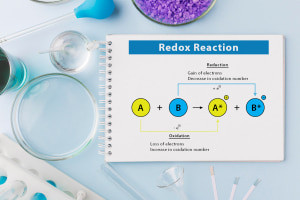
This course begins with an overview of the five types of chemical reactions: combination, decomposition, single-displacement, double-displacement and combustion. We describe each of these reactions in detail to explain how their reactants combine to form one new compound or degrade into more substances. We then cover oxidation numbers and their role in a chemical reaction as atoms or ions lose or gain electrons and are labelled as ‘oxidised’ or ‘reduced’ respectively. The course outlines how these oxidation rules apply to metal and non-metal compounds. Our next topic discusses redox reactions, which involve the exchange of electrons between reactants. We show you how to name inorganic compounds by replacing the suffix ‘ine’ with ‘ide’.
We then move on to chemical equilibrium and the factors that impact it. We study reversible reactions, which involve reactants and products that are interchangeable, before laying out the distinctive features of an equilibrium reaction under constant conditions. The course defines equilibrium expression’ and traces the connection between the equilibrium constant and temperature, pressure, concentration and catalysts. We compare weak and strong acids and bases and outline their dissociation processes. This is followed by an analysis of pH and the scale used to measure the acidity of a solution.
The course covers reaction kinetics, which is the study of the rate of a chemical reaction and the variables that affect it. We explain how the quantity of reactants or products changes over time and how that affects the rate of reaction. We also examine collision theory, which explains how reaction conditions like energy and orientation influence the rate of the reaction. Finally, we demonstrate the acceleration of a chemical reaction by raising the temperature, concentration and surface area or using a catalyst. This basic chemistry course helps learners and students understand complex chemical concepts and breaks down complicated chemical processes into easy-to-understand steps. Sign up to understand chemical reactions and the equations used to calculate them.
What you'll learn in this course?
-
Physical Chemistry
-
Inorganic Chemistry
-
Organic Chemistry
-
Chemical Engineering
-
Chemistry
Course Curriculum

Advance Learning - Chemistry
Galway, Ireland
$20.00
Course includes:
-
 Duration
1.5-3 hrs
-
 Modules
4
-
 Certifications
certificate
After you complete the course, receive a digital certificate or request a printed copy shipped to you.
